Module 01
Heat Pump Architecture
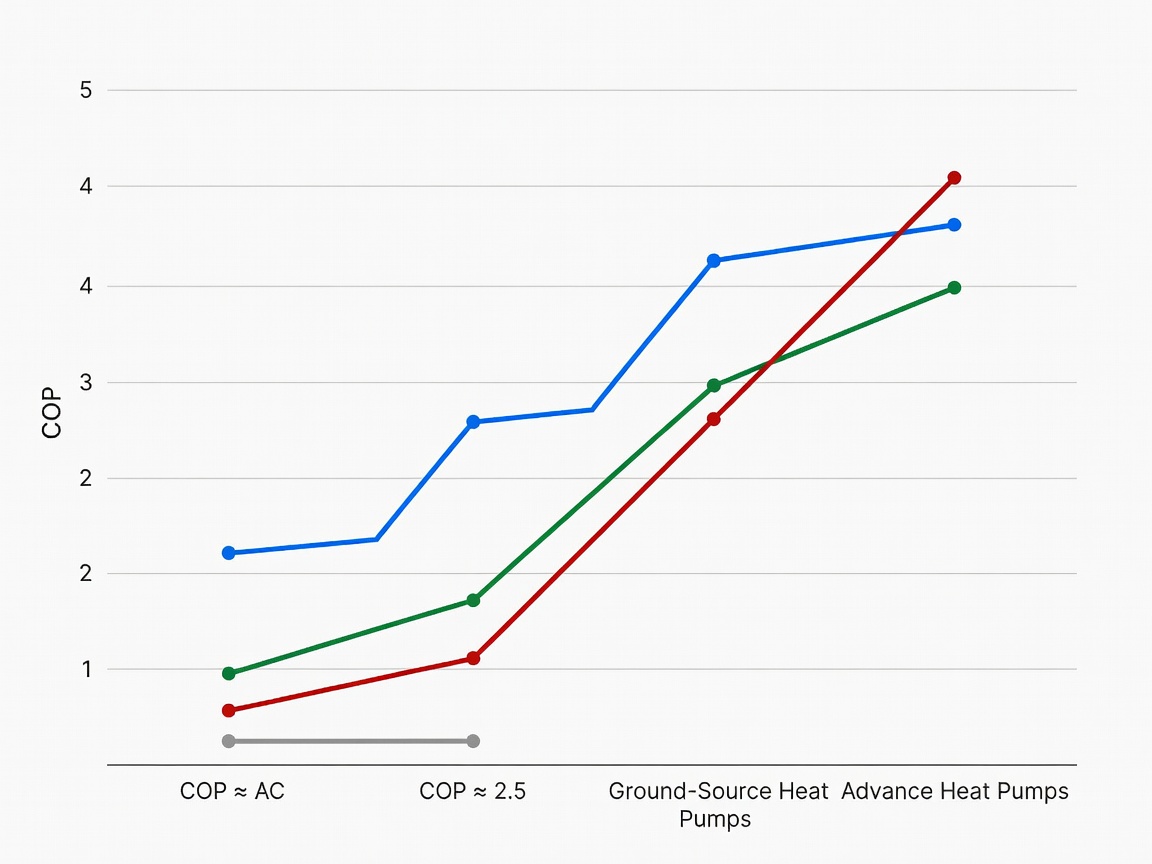
Coefficient of Performance
The core metric of any thermal regulatory system is the Coefficient of Performance (COP). Traditional Air Conditioning runs on outdated mechanics, rarely achieving a COP above 3.0. A modern Heat Pump architecture regularly operates at a COP of 3.5 to 4.5. This means for every 1 kilowatt of electrical energy ingested, the system outputs 3.5 to 4.5 kilowatts of cooling capacity.
System Diagnostics: Ductless Mini-Splits
- Efficiency Standard SEER2 up to 33.1
- Energy Phase Inverter-Driven Compressor
- Zoning Capability Independent Node Control
This is achieved via a variable-speed inverter compressor. Older systems operate in binary states: ON (100% load) or OFF (0% load). The inverter matrix allows the compressor to modulate its frequency continuously, maintaining the target thermal state without massive voltage spikes.
Geothermal Integration
While air-source systems are standard, ground-source (geothermal) heat pumps link directly into the Earth's stable subterranean thermal mass. Below 10 feet, the ground maintains a constant temperature (~55°F / 12°C). Dumping excess ambient heat into this stable matrix requires exponentially less mechanical energy than pushing heat into 95°F / 35°C summer air.
The initial hardware deployment for geothermal is intensive, but the long-term energy draw reduction is unmatched in mechanical systems.